
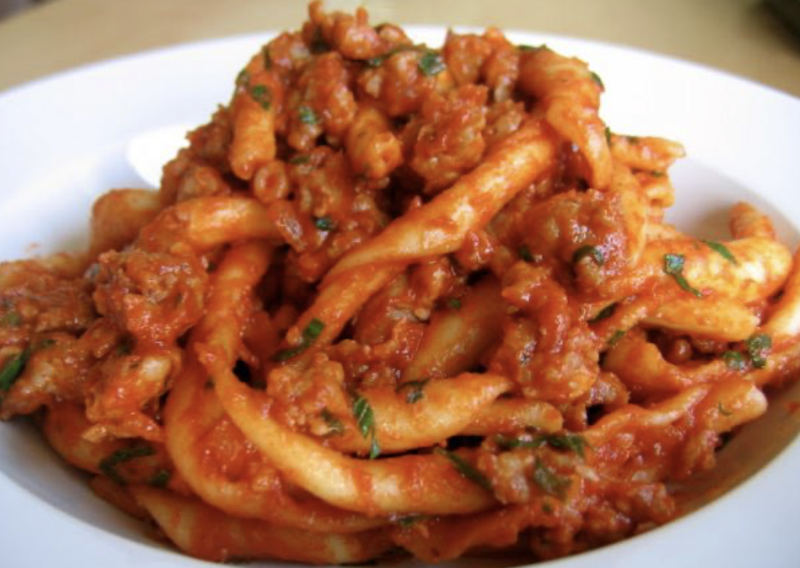
 Pasta is ubiquitous in Italy, with different regions having their own distinctive traditions. Tuscany is known for its wide ribbons of pappardelle, Puglia for its little ear-shaped orecchiette, and Liguria for its delicate trofie. Each reflects the history, ingredients, and traditions of the people who made it.
And then there’s strozzapreti, a pasta associated with Emilia-Romagna whose name has roots dating back to the 1500s. The name translates to “priest stranglers.”
There are several legends about how this innocent-looking pasta acquired such an outrageous name.
One tells of priests who enjoyed the pasta so much that they ate it greedily, prompting villagers to joke that they might choke on it.
Another story makes more sense. For centuries, the Catholic Church wielded enormous power in Italy, and priests were not always beloved by the poor families who were expected to support them. According to one legend, a frustrated housewife, obliged to prepare pasta for a priest, twisted each strip of dough while muttering that she hoped he would choke on it!
These stories remind us that in Italy, food is not simply nourishment. It often reflects a history of poverty, power, and resentment.
That’s one of the things I love most about Italian cooking. Behind even the simplest dish, there is often a story passed from one generation to the next, sometimes with a little truth, a little exaggeration, and a generous helping of imagination.
Leave A Comment