
 The opening lines of IT TAKES A LIFETIME read:
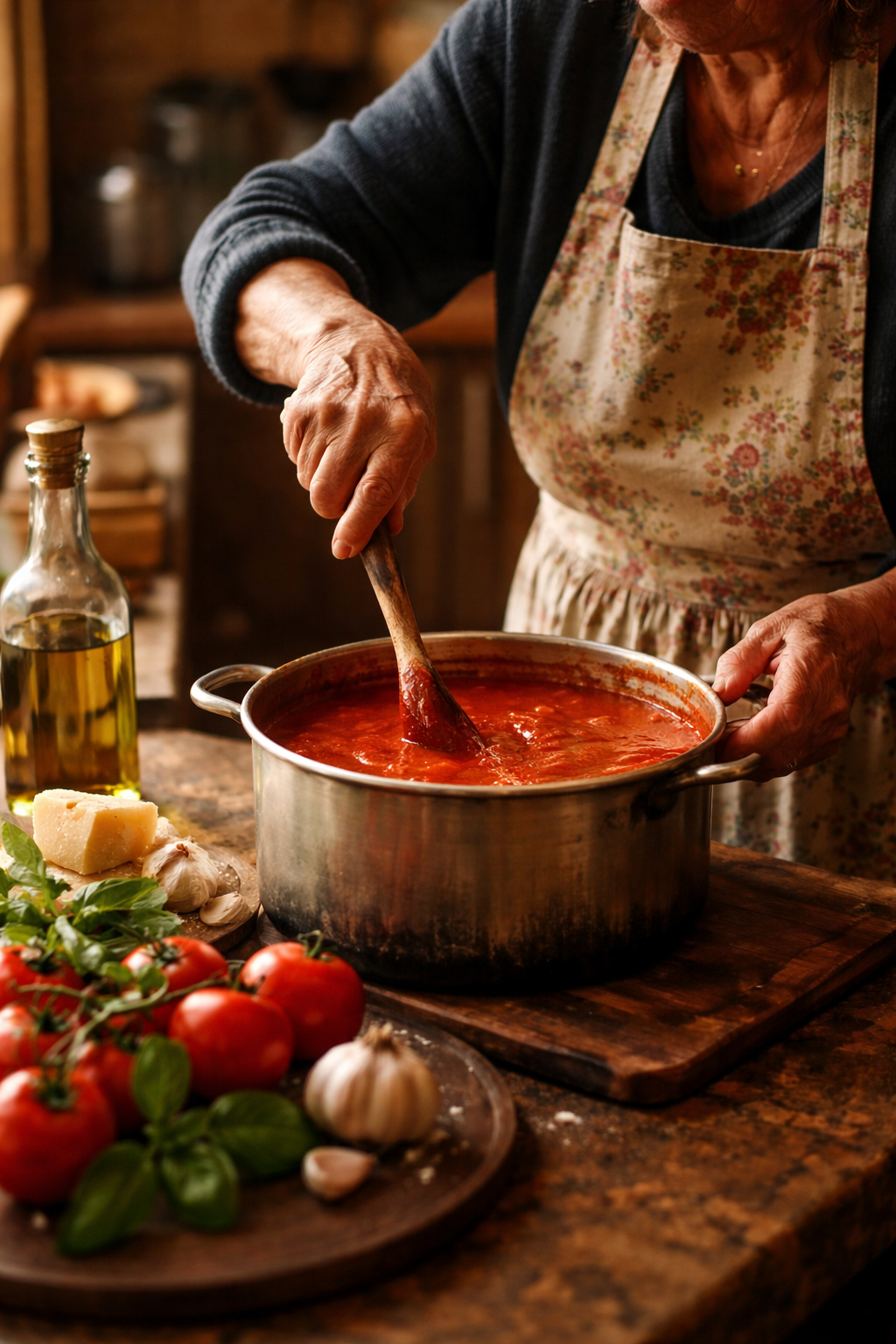
Comfortable as a priest before the altar, Carmela stands at her stove.
Her right arm moves in familiar circles as she stirs rich red sugo with
a wooden spoon—the spoon that never hits me. While she cooks, she
moves her lips slowly in prayer. The scent of her heavenly tomato-
and-garlic sauce quiets me, fills me with peace.
Food was Nonna’s love language.
When I ran to her house with the heavy heart of a child, she didn’t ask questions. She cooked. Linguini with ricotta. Crispelle dusted in sugar. Spaghetti topped with mudika. Falahoni and fresh baked bread. “Mangia, mangia,” she would say, urging me to eat, to take in comfort the best way she knew how to give it.
Her kitchen was her sanctuary. The stove, her altar. The scent of tomato and garlic quieted my fears long before I could name them. I didn’t know then that she was wrapping me in love.
In my own kitchen, I am not the cook she was, but when the aroma of chicken and peppers fill the air, my sons know they are home before they even open the door. Chicken pastina soup simmers on the stove when they are ill. Meatballs, bracciole, stuffed shells, orecchiette remind them of who they are and where they come from.
I understand now what Nonna was teaching me without words: sometimes love is not spoken. Sometimes it is stirred slowly in a pot and served at the table.
Food is more than nourishment. It is memory. It is heritage. It is love made visible.
Leave A Comment