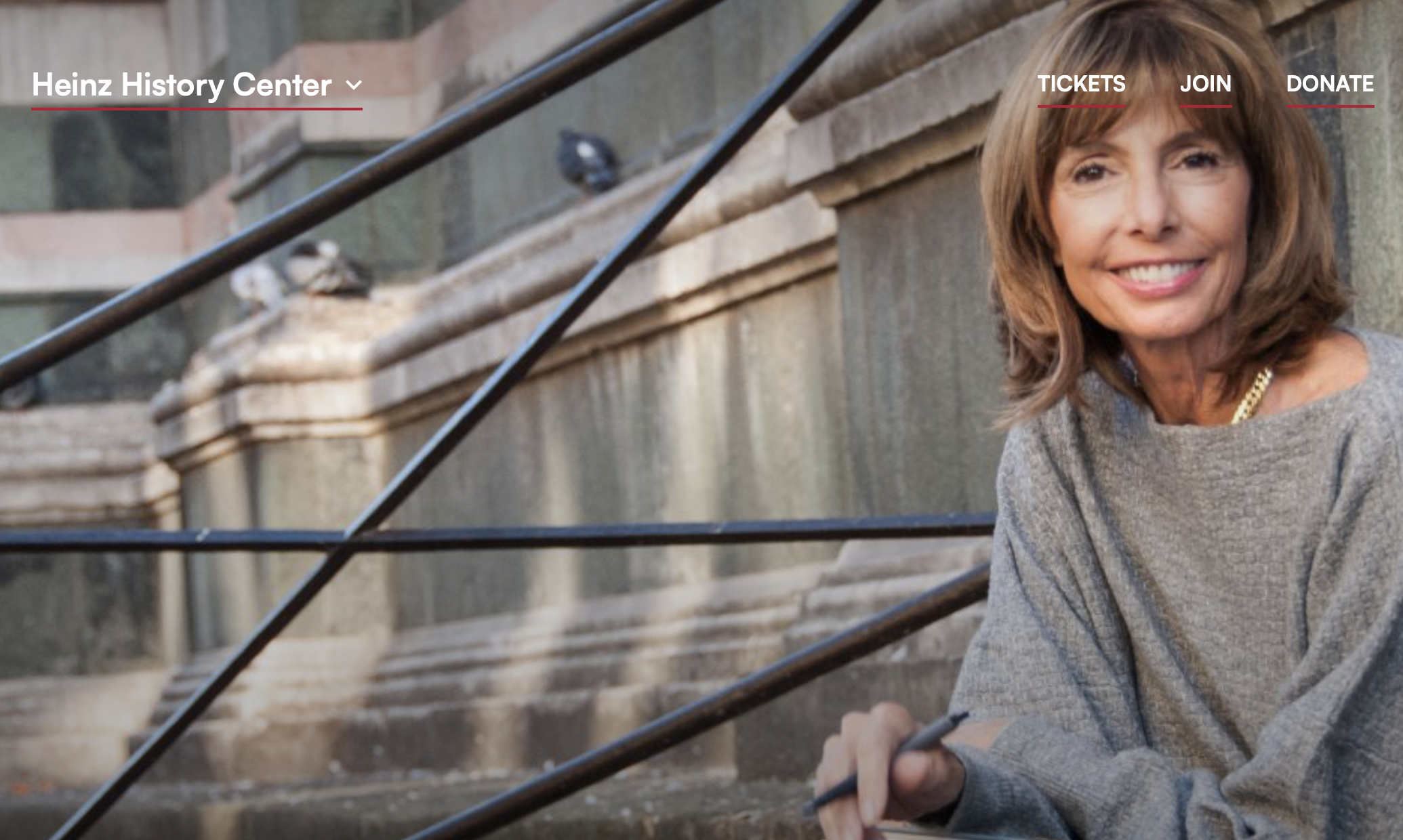
PITTSBURGH: IT TAKES A LIFETIME BOOK TALK

by libbycataldi under Uncategorized

A Conversation with Libby Cataldi

Of all the stops on my September book tour, Pittsburgh holds a special place for me. It’s where my grandparents built their American life after leaving Rotondella, where my mother was born, lived, and died, and where I grew up. In many ways, Pittsburgh is where the story of It Takes a Lifetime to Learn How to Live began.

DATE AND TIME
Wednesday, September 9, 2026
6:30–8:30 PM
Doors open at 6:00 PM

LOCATION
Heinz History Center
1212 Smallman Street
Pittsburgh, PA 15222

TICKETING
Free with advance registration.  The program will take place in the museum’s sixth floor Detre Library and Archives.

REGISTER

Join the Italian American Program for a conversation with author Libby Cataldi about her new memoir, It Takes a Lifetime to Learn How to Live: An Italian American Story of Coming Home.

Rooted in the legacies of immigration, family, and identity, Cataldi’s intimate memoir traces her family’s journey from the southern Italian village of Rotondella to Pittsburgh.

Raised in an Italian American household shaped by a past that was rarely discussed, Cataldi embarks on a deeply personal journey back to her ancestral home in search of truth, belonging, and a deeper understanding of the generations that came before her.

In Italy, she uncovers the lasting influence of tradition, silence, sacrifice, and resilience, exploring how forces such as poverty, rigid Catholicism, patriarchy, the Mafia, malocchio, and omertà shaped the lives of her grandmother, mother, and ultimately herself.

Through her family’s story, Cataldi will reflect on the enduring legacy of immigration, the strength of Italian American women, and what it means to reconcile the past while finding a sense of home.

Following the presentation, enjoy a Q&A with the author and a book signing.

(Please feel free to forward this to anyone you think might be interested in attending.)
JOIN THE FUN! Sharing Recipes with a History

by libbycataldi under Uncategorized

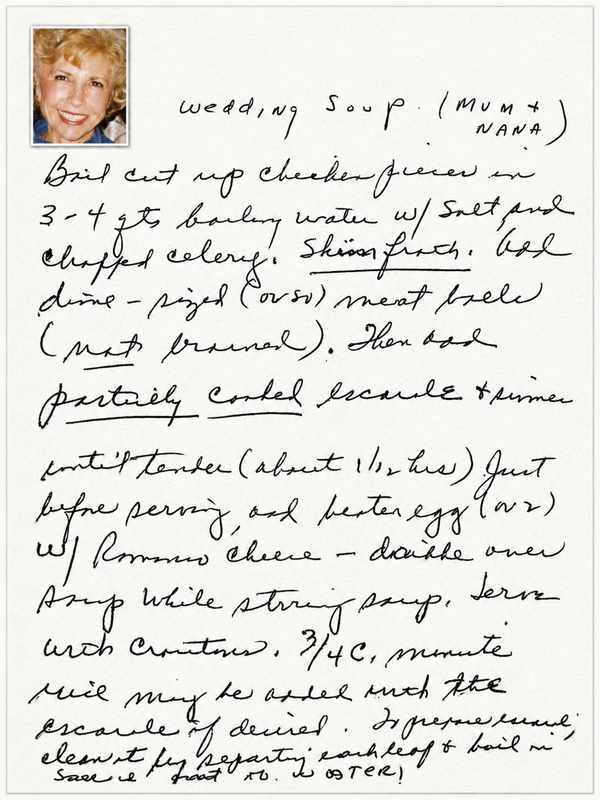
Original recipe card handwritten by my mother Laura.

Please Join the Fun!

Many families have a recipe that carries a story. Some are written on stained recipe cards, while others live only in memory. Either way, they’re part of our family’s history.

I’d love for us to preserve those stories together. If you have a family recipe with a history, share it using this simple format:

  1. Recipe
  2. Our Family’s Story
  3. Why It Matters
  4. Passed Down Through

I’ll collect the recipes and stories over the coming months and begin sharing them during the holiday season. It might be fun to try a recipe from another family, learn the history behind it, and celebrate the memories that good food brings to the table.

I’ll go first.

1. Recipe: Italian Wedding Soup

2. Our Family’s Story:
For years, I thought it was called Italian Wedding Soup because it was served at weddings. In fact, my dad insisted it be served at my wedding for exactly that reason!

But the recipe actually began in southern Italy as minestra maritata, or “married soup.” The marriage wasn’t between a bride and groom, but between meat and greens simmered together in a rich broth. When Italian immigrants came to America, the recipe evolved into the Italian Wedding Soup many of us grew up with.

3. Why It Matters to Me:
Whether someone was sick or we were celebrating, Nonna or Mom made a pot of this soup. Homemade chicken stock, escarole, tiny meatballs, and eggs whisked with freshly grated Parmesan and drizzled into the bubbling broth still take me back to their kitchens and to their love.

4. Passed Down Through:
Carmela Perciante, Rotondella, Italy → Laura Cataldi, Pittsburgh, Pennsylvania → Libby Cataldi, Pittsburgh, Pennsylvania & Florence, Italy

Now It’s Your Turn
Do you have a family recipe with a history? Don’t worry if your recipe isn’t fancy. Some of the best family stories come from the simplest meals: Grandma’s soup, Dad’s pancakes, Aunt Mary’s meatloaf.

You can post your recipe and story in the comments below or send them through my website (libbycataldi dot com) on the LIFETIME or CONTACT page. If possible, include a photograph of the handwritten recipe card, the finished dish, or the person who first made it.

Most importantly, tell us the recipe’s story. Who first made it? Who passed it down to you? If you know, tell us where the recipe originated. Then include your name and hometown so we can honor the journey it has taken from one kitchen, one family, and one generation to the next.

Together, let’s preserve the recipes, the people who passed them down, and the memories that might otherwise be lost. One family, one kitchen, one generation at a time.

After all, every recipe tells a story.

AN OPEN LETTER TO MY SON: Twenty Years of Sobriety, July 21, 2006 – July 21, 2026

by libbycataldi under Uncategorized

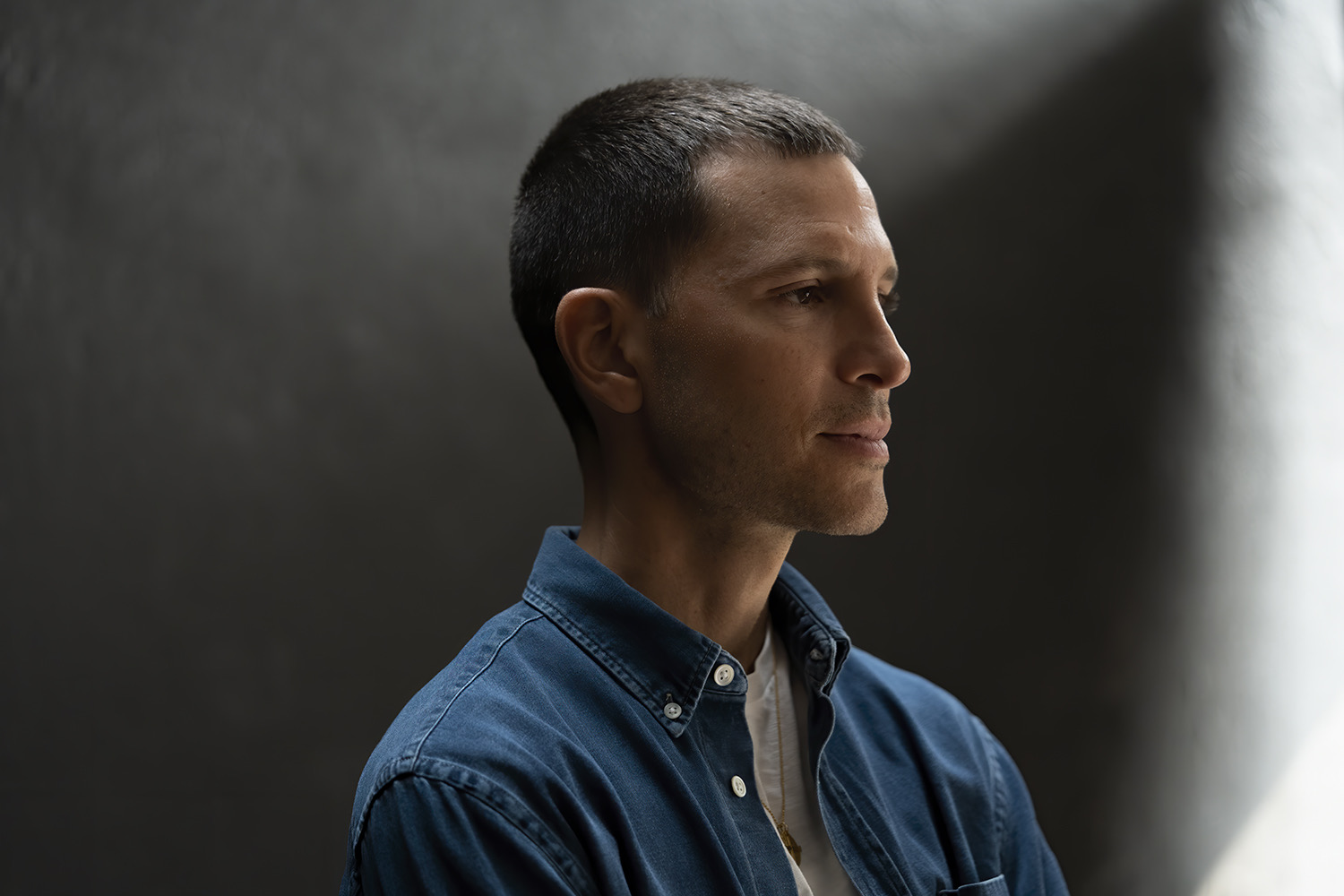
Photo Credit: George Burroughs

Twenty years.

Ten years ago, I called your sobriety “a huge feat.” It was. After fourteen years of addiction, every sober day was a miracle. We knew how close we had come to losing you, and we never took your recovery for granted.

Twenty years is not one decision. It is thousands of quiet decisions. Over the past two decades you’ve built a life of integrity, compassion, and truth. You pray, meditate, and carry a quiet peace that radiates to everyone around you. You’ve built two successful businesses that you lead with vision. You keep your word, and people trust you. Spirituality isn’t simply part of your life – it is the foundation upon which you’ve built everything else.

Years ago, a young man struggling with constant relapse told me, “If Jeff can do it, so can I.” You give others hope. You give back. You quietly make the world a better place.

Your family, your friends, and all who love you celebrate this remarkable achievement.

We’ll continue to stay close.

Thank you for coming home – to yourself and to us.

WHEN THE STORIES ARE GONE

by libbycataldi under Uncategorized

About a year before my father died, my sons and I were visiting my parents in Florida. Jeff and Jer admired my dad and all he had achieved. The old Marine was, in many respects, their hero, and they were excited to interview Granddad about his life. They set up a video camera and began asking gentle questions, beginning with his growing-up years.

Dad humored them for a little while. Then, with weariness, he said something like, “No one wants to know about an old man’s life. Put that thing away.”

I remember feeling deeply disappointed. We had come ready to ask the questions, but we had waited too long. Dad was dying, and he knew it. He wasn’t interested in revisiting his successes and failures anymore. He had already lived those chapters. His thoughts were no longer on the past but on what lay ahead.

And when he died, the stories went with him.

Every family has stories like these – stories that disappear unless someone is willing to ask the questions.

That experience is one of the main reasons I pressed my mother with questions during the final weeks of her life. My mother was dying. Time ends. Lives pass.

If you have questions for the elders in your life, ask them now while they’re still willing to answer. Don’t assume there will always be another holiday, another visit, or another conversation.

And if you’re the one with the stories, consider writing them down. You may think no one cares about the details of your life. My father believed that.

He was wrong.

One day, someone you love will wish they had asked one more question, and they will treasure every story you leave behind.

Is there one story from your parents or grandparents that you’re grateful you heard? Or are you like us? Is there something you wish you had asked before it was too late?

FREEDOM SPEAKS MANY LANGUAGES

by libbycataldi under Uncategorized

Living part of each year in Italy has made me appreciate two countries. While different in many ways, both America and Italy share a deep love of liberty. This Fourth of July, as fireworks light the sky, I’ll be thinking of the two countries I love. One gave me my heritage. The other gave my family its future.

As we gather for parades, fireworks, and backyard barbecues, I think about the millions of Italians who crossed the Atlantic with little more than courage and dreams. They came seeking what generations of immigrants have always sought – freedom, opportunity, and a chance to build a better life for their children.

What they brought with them enriched America in countless ways: cherished recipes, strong family traditions, craftsmanship, music, fashion, scientific discoveries, and entrepreneurship. My dad was adamant in reminding me that Italians contributed to American culture, and that I should always be proud.

Today there are 16 to 18 million Americans of Italian descent in the United States, but we represent only a portion of all those who immigrated to this country and helped make it strong.

Perhaps that’s why the words engraved at the Korean War Veterans Memorial – “Freedom Is Not Free” – continue to resonate with me. Those four words honor not only generations of American-born service members, but also countless immigrants who chose to defend the country they had come to call home.

Happy Independence Day! And thank you to everyone, past and present, whose courage reminds us that freedom is a gift worth protecting and celebrating.

Questions I Wish I Had Asked My Father

by libbycataldi under Uncategorized

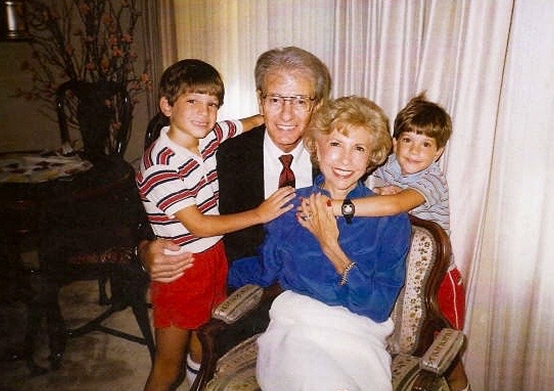
Son Jeff, Dad, Mom, Son Jeremy

My father has been gone for many years, but I still hear his voice almost every day.

“Speed, Accuracy, and Results.”
“Do what you’re told, when you’re told, as you’re told. If you know a better way, tell it to me. If not, do it my way.”
“What’s wrong, why is it wrong, and what are you doing to do about it?”
And my favorite: “Once I thought I was wrong, but I was mistaken.”

In LIFETIME, I write a great deal about my mother and very little about my father. But after Nonna, no one influenced my life more than my father.

He was the person I called when I was in trouble, even well into adulthood. He was always ready with advice. The truth is, he was almost always right.

We sang together – the songs of his youth: “On the Big Rock Candy Mountain,” “You Are My Sunshine,” “Smile Awhile,” and dozens of others. Today, I sing them with my sons and grandchildren, and somehow Dad lives on.

My sons adored him. They often say, “Granddad earned the right to tell us what to do. He could talk the talk because he walked the walk.”

Born into abject poverty, he never forgot where he came from. He worked relentlessly, built an international business, and created opportunities for his children and grandchildren that he himself never had.

What I regret is that I didn’t ask more questions. I wish I had asked him more about his family. He adored his older brother Fred, yet I know only fragments of those stories. He was a Marine in the First Landing Battalion on Guadalcanal. What happened there? How did he build such a successful company? Why did he love all things Italian?

Family history is often preserved in conversation. And conversations have an expiration date. When our loved ones pass away, they take their library of life with them.

That realization is one of the reasons I pressed my mother for answers during the final years of her life. I knew the opportunity would not last forever. Time ends. Lives pass. Stories disappear. And sometimes all we’re left with are questions.

What about you? Is there someone you wish you had asked more questions? And if there is someone still living whose story matters to you, don’t wait.

PRESERVING CULTURAL HERITAGE: A RECIPE

by libbycataldi under Uncategorized

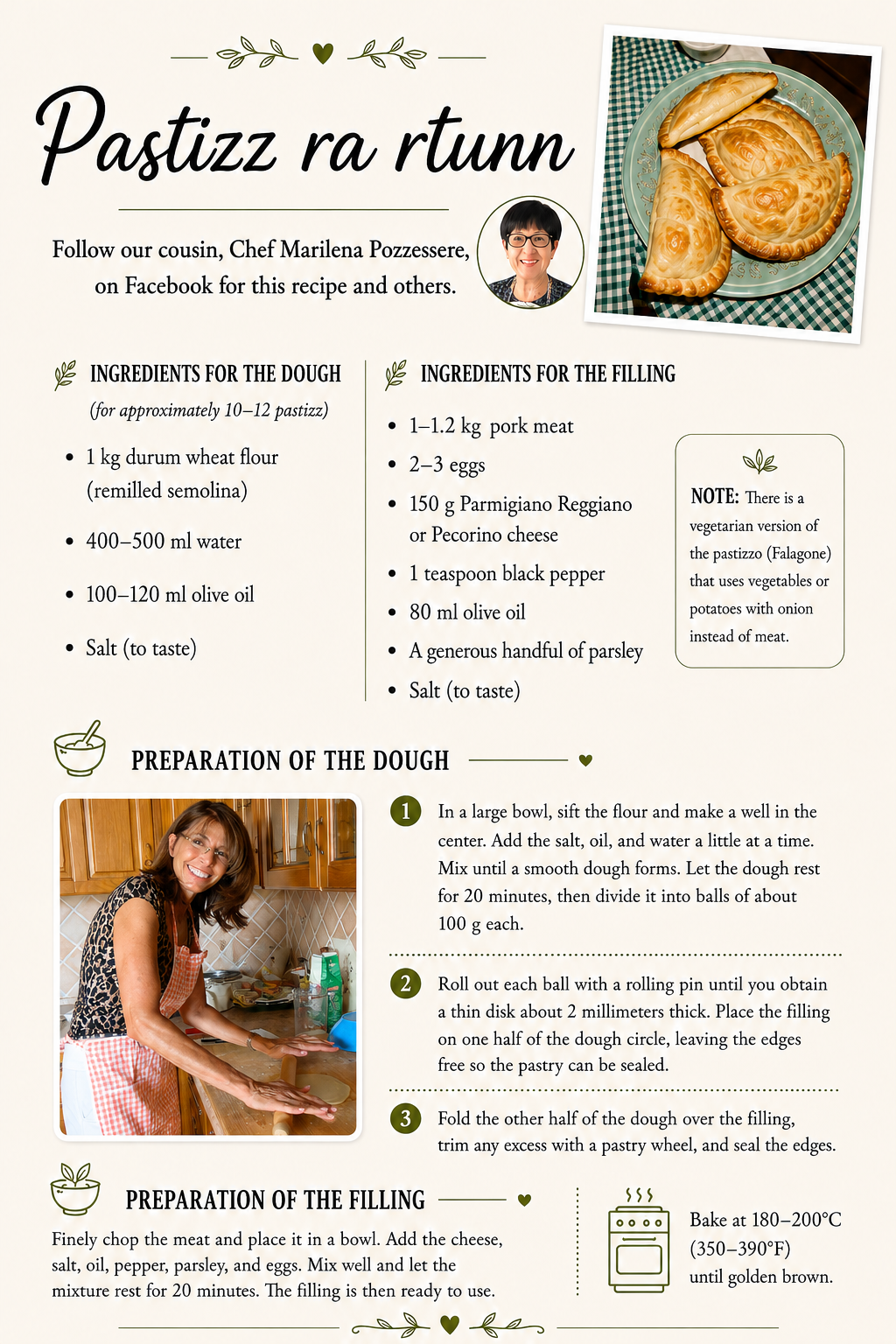
Every region in Italy has its culinary traditions. In Florence, there is Bistecca Fiorentina; in Bologna, Ragù alla Bolognese; in Sicily, arancini.

…and in Rotondella, we have pastizz and falagone.

Food has a way of preserving memory, culture, and love across generations. One of my most cherished memories of Nonna Carmela is captured in this passage from Lifetime:

By the time I reached the thirteenth and final concrete step that led to Nonna’s kitchen, I already smelled the scents of cooking. I peered through the screen door as I had as a child and saw that nothing had changed. Nonna stood in front of the kitchen table and was hunched over her wooden pastry board that she called u scanatur, where I saw a large mound of flour shaped like a volcano. I could guess that she was making i falaoni, traditional Rotondellese spinach, potato, and meat pies, formed into half-moon shapes that resembled little crusty cushions. She must be making them today, I thought, to celebrate my coming home.

When your children come home – or when special guests arrive – what do you cook to celebrate them? What dish holds those deep and special memories for you?

I hope some readers enjoy trying this recipe. Our cousin Chef Marilena, who records a cooking show for Il Corriere Lucano in Basilicata, continues to preserve and share these culinary traditions with the next generation.

Buon appetito!

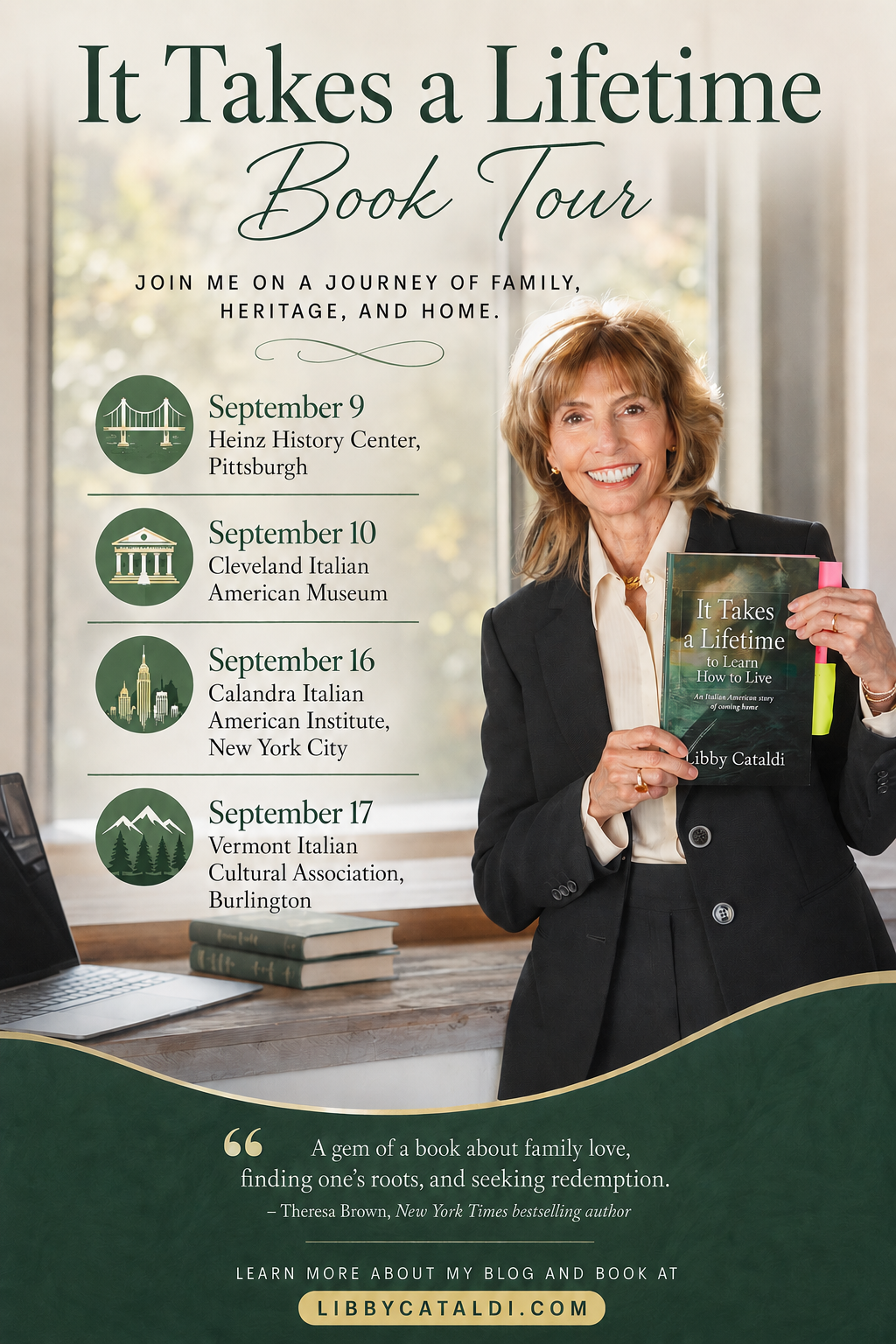
UPCOMING BOOK TOUR

by libbycataldi under Uncategorized

I’d be delighted to see some of you at one of these upcoming book tour presentations. Your encouragement and support have meant so much to me, especially during my previous tour for Stay Close.

Please feel free to share this with friends who might be interested in family history, finding their roots, or exploring the possibility of forgiveness and reconciliation within their family.

It Takes a Lifetime to Learn How to Live is a story about family, identity, and coming home to ourselves. I’ve learned that understanding our past can help us move forward with greater compassion, wisdom, and love. It truly does take a lifetime to learn how to live.

I hope to see some familiar faces along the way – and meet other new ones.

FREEDOM RIDES

by libbycataldi under Uncategorized

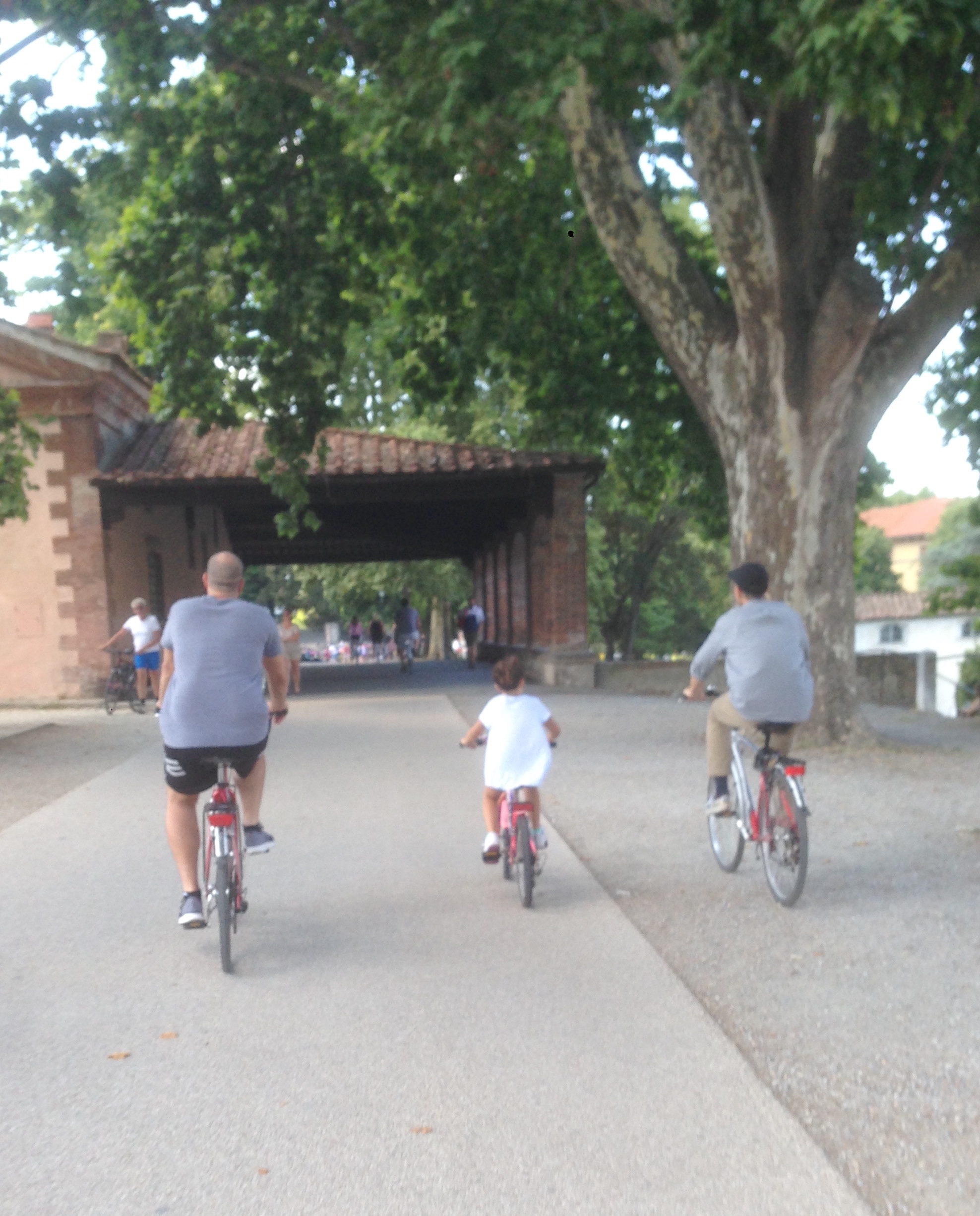
When you think about riding your bike as a child, what memories come to mind?

For me, riding a bike meant freedom. Pedaling hard down the alley behind our house, streamers flying behind me, I felt untouchable.

Those feelings came rushing back recently when my older son told me how much he was enjoying his new bike and his ride to work every morning in Los Angeles and my younger son wondered how old his daughter had been when she learned to ride.

In an instant, I was back on my own bicycle, escaping the chaos of our family home on what I came to think of as my “freedom rides.”

The moment my feet hit the pedals, I was Annie Oakley mounting her horse, Target, or the Lone Ranger riding Silver. Down the driveway and into the city streets, I zoomed past the Martinos, who raised chickens in their backyard, and past the Caputos, with twelve children—including two sets of twins.

At the end of our alleyway, I crossed a one-way street, checking quickly to the right for cars. Then I barreled into another alley, glancing toward Vito’s corner store, where they sold penny candy and my favorite pink Dubble Bubble gum.

The last street was a straightaway, and I picked up speed. My bicycle streamers snapped in the breeze.

Nonna was my destination.

Back then, bicycles gave children something precious: freedom without supervision. We disappeared for hours, expected only to be home before dark. Our world was made up of corner stores, sidewalks, and secret shortcuts only kids seemed to know.

I wonder if children today feel that same sense of freedom. Or has childhood changed? Maybe phones and social media keep kids connected every second, but somehow less free to explore their own imaginations.

For us, was it the speed? The adventure? The feeling that the world suddenly became bigger the farther we pedaled from home?

Maybe that’s why bicycles stay with us long after childhood. Somewhere inside us, that kid with streamers flying is still racing toward a place that felt free, liberating, and completely our own.

LOVE IS AN ACTION VERB

by libbycataldi under Uncategorized

A friend of mine, Laura Oliver, recently published an article in The Talbot Spy entitled Love is an Action Verb. That phrase stayed with me.

Yesterday I spoke with my granddaughter. She is sixteen years old, finishing her sophomore year, and squeezing every possible moment from her day. She had exactly five minutes to talk before leaving for her internship.

I, on the other hand, had nowhere to be.

The contrast made me smile.

At sixteen, life is a whirlwind of classes, deadlines, friends, family commitments, and the endless small urgencies that seem so important.

Then life moves on. College arrives. Careers begin. Families grow. Children become adults and have children of their own. The years fill with responsibilities and obligations, and before we know it, we find ourselves standing where our parents once stood – on the other side of young.

When I was in college, I called my parents every Sunday. It was simply what I did. Somewhere along the way, those regular calls became occasional ones. I called when I had time.

As I thought about Laura’s phrase, I found myself wondering how well I had practiced it during those busy years. I certainly said “I love you,” but did I always make the phone call, attend every event that mattered, or stop what I was doing long enough to listen with my full attention?

I would like to say yes, but I know the answer: no, not always.

Now I understand something I couldn’t fully appreciate then: making the call is part of loving. Showing up is part of loving. Listening is part of loving. Love is not only what we feel. It is what we do. Love is an action verb.

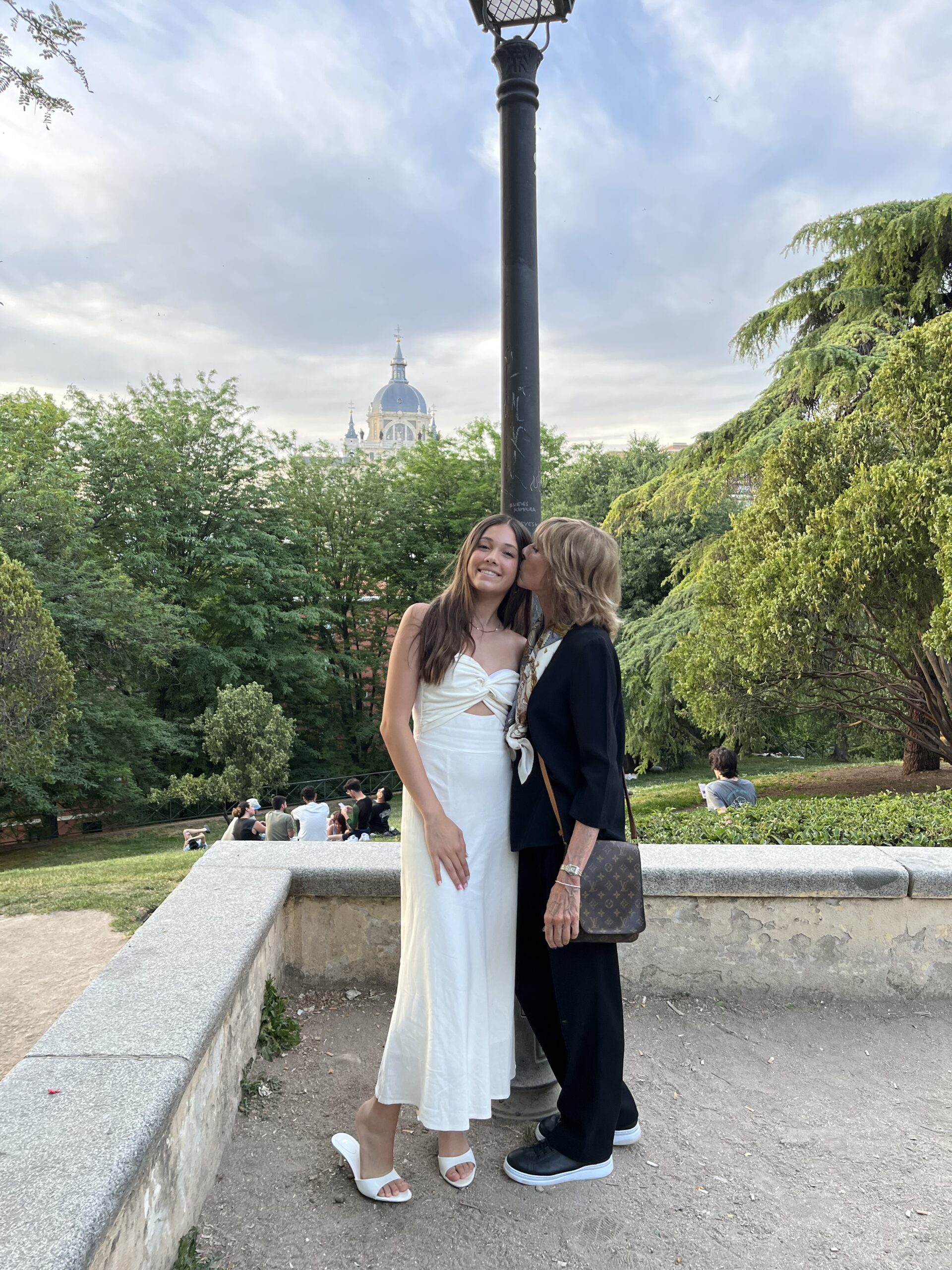
So yesterday, I was grateful for those five minutes with my granddaughter. Even though we were thousands of miles apart, through the miracle of a video screen, I watched her finish getting ready for her day.

Then she looked into the camera and asked, “How do I look, Nonna?”

I smiled. “You look beautiful, my babydoll. You look just beautiful.”

And as we said goodbye, I realized that those few hurried minutes were their own small act of love – hers in making time for me, and mine in being there when she did.

Go to Top