
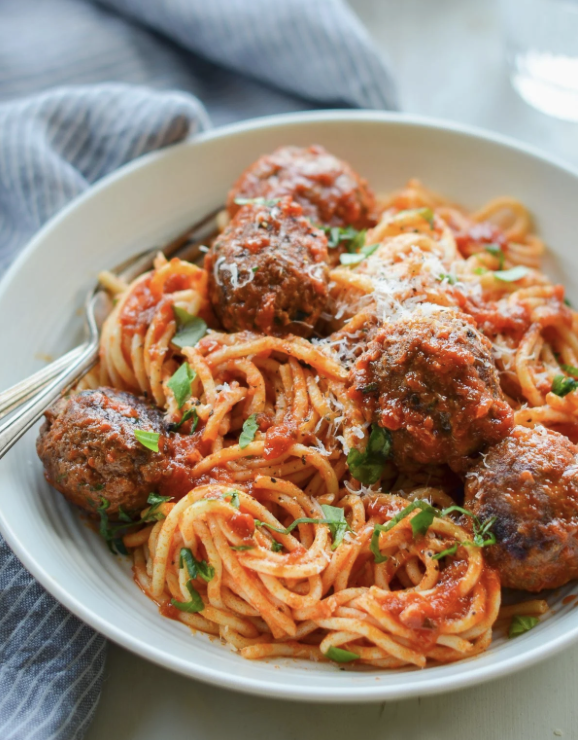
The myth of spaghetti and meatballs being “Italian” has seduced the world. In reality, you will not find spaghetti and meatballs on menus in Italy. This iconic plate was created by Italian immigrants after they arrived in the United States.
Meatballs (polpette) are absolutely common in Italy, but they are served as a main course, not piled on top of pasta.
In December 2025, UNESCO awarded Italian cuisine one of the world’s highest cultural honors: Intangible Cultural Heritage of Humanity. It was the first time an entire national cuisine received this recognition. The award celebrates not just recipes, but Italian food as a living cultural practice — family meals, shared tables, and traditions passed down through generations.
Food historian Alberto Grandi, author of La Cucina Italiana Non Esiste, wrote in The Guardian: “The real history of Italian food is turbulent: a saga of hunger, improvisation, migration… and sheer survival. Those who left Italy did so because they were hungry.”
Many of us romanticize Italy and Italian food, but the real story behind many dishes beloved by Italian Americans was shaped by necessity. During the great diaspora, our ancestors boarded ships for New York, Buenos Aires, and other ports, fleeing hunger. They carried memories of the Old Country and did their best to recreate those flavors when they finally had access to ingredients and abundance.
So no, spaghetti and meatballs isn’t served in Italy, but it brings comfort to many of us as we simmer gravy or sauce for Sunday dinner. And that, perhaps, is exactly what UNESCO’s award honors: intangible cultural heritage – the meals, the memories, and the shared traditions that bind families together.
Now please pass me another meatball.
Leave A Comment